How Long Does a Pickleball Paddle Last? Maker Guidance and Planner
How long a pickleball paddle lasts per Paddletek and Selkirk guidance, with a planner for your sessions per week, warning signs and replacement and care picks.
How long a pickleball paddle lasts per Paddletek and Selkirk guidance, with a planner for your sessions per week, warning signs and replacement and care picks.
Quick answer
Paddletek says casual players, once or twice a week, can get several years from a quality paddle, while regular players at three to five sessions a week typically replace every 6 to 18 months. Competitive daily players may replace faster. Selkirk says a paddle can last one to five years, depending on usage and care.
Say how often you play, how hard you hit and what your paddle shows now. The planner restates the maker bands that match your answers and nothing more.
This planner restates guidance from named makers. It does not predict your paddle. To test a paddle you own, use the dead spot test.
Specs come from maker pages. Amazon listings often combine several options, so each card says which one to choose. Paddlory earns a commission on qualifying purchases through these links, at no extra cost to you.

Replacement. Selkirk lists a 16 mm core and a fiberglass face, with a limited lifetime warranty against defects. The listing mixes shapes and weights, so choose Control, S2 and your weight.

Replacement. JOOLA lists 8.0 oz average, 16.5 by 7.5 in and a six month warranty, 12 months with NFC registration. The listing mixes shapes and thicknesses, so choose Perseus 16mm.

Replacement. Selkirk lists a 13 mm core, 7.7 to 8.1 oz and a hybrid fiberglass and carbon face. The listing covers three lines, so choose Power Air, S2, Midweight.

Care. Tape protects the rim from scrapes and minor dings, the kind of damage Paddletek says shortens a paddle life. The listing is 20 mm by 350 mm in white.
This five-minute video explains why lifespan depends on how you play, and walks through five signs that a paddle is worn out.
The figures differ because each maker frames them differently, so each row shows what the source actually says.
| Maker | Guidance | Source |
|---|---|---|
| Paddletek | Casual players, once or twice a week, can get several years. Regular players, three to five sessions a week, typically replace every 6 to 18 months. Competitive players who hit hard and play daily may replace even sooner. Care extends the upper end of each range | Paddletek replace guide and care guide |
| Selkirk | A paddle can last one to five years depending on usage and care. High-level players who compete regularly may see peak performance for three to six months, after which the paddle remains playable | Selkirk paddle care article and care guide |
| Selkirk University video | Lifespan depends on how, how often and where you play. The instructor has seen faces wear down in one or two months, and paddles last some players six to eight months before a drop-off | Selkirk video |
| Core and face wear | Every contact sends energy into the core. Over thousands of repetitions the core loses rebound, dead spots form and the sweet spot shrinks. Face texture smooths from the outside in | Paddletek replace guide |
| Sign | What Paddletek says | Source |
|---|---|---|
| Less spin | Spin is usually first to go. Serves land flatter and topspin drives dip less. Run a thumb across the face to see if it feels smoother than new | Paddletek replace guide |
| Less power | A gradual loss over weeks, not overnight, points to the paddle rather than a slump. The paddle feels dead at contact | Paddletek replace guide |
| A different sound | A duller, hollower or inconsistent sound can mean the core structure has shifted. Alone it does not mean the paddle is done | Paddletek replace guide |
| Harsher mishits | More vibration and face torque on off-center contact, so the sweet spot has shrunk | Paddletek replace guide |
| Visible damage | Cracks, delamination, warping or a loose edge guard mean replace it. Scuffs and small scratches are cosmetic | Paddletek replace guide |
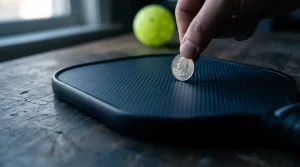
To check your own paddle for soft areas, use our dead spot test. This page covers how long paddles last, and that page covers how to test yours.
| Topic | What the source says | Source |
|---|---|---|
| Heat | A hot car can push interior temperatures past 140 F and soften the adhesive bonding face sheets to the core. Store paddles indoors, not in the trunk | Paddletek care guide |
| Cold and water | Cold increases brittleness. A little rain will not hurt, but submerging a paddle should be avoided because honeycomb cells can trap water | Selkirk care guide |
| Impacts | Scraping the court on low dinks, tapping paddles hard and dropping the paddle on concrete send shock the construction was not designed to absorb | Paddletek care guide |
| Rotation | At three or more sessions a week, rotating two paddles spreads the impacts across both | Paddletek care guide |
| Warranty | Selkirk covers defects for the paddle life with registration. JOOLA lists six months, 12 with NFC registration. CRBN lists one year. All exclude normal wear and tear | Maker warranty pages |
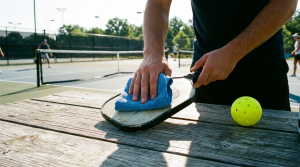
Cleaning helps the face keep its texture. See how to clean a paddle and paddle covers for carbon faces. To protect the rim, read the edge guard guide.
More on wear: six signs a paddle is worn out and the lost pop test. Material matters too, see carbon fiber versus fiberglass.
Ready to replace? Start with the best paddles for intermediate players and how to choose a paddle.
We did not test these paddles. Lifespan bands come from the Paddletek replace and care guides and the Selkirk care article, care guide and video. Warranty terms come from the Selkirk, JOOLA and CRBN warranty pages, read in November 2026.
We removed earlier unsourced claims about face and core materials lasting longer or shorter. Makers give bands, not guarantees, and wear depends on how you play and store the paddle.
It depends on how often and how hard you play. Paddletek says casual players, once or twice a week, can get several years, and regular players at three to five sessions a week typically replace every 6 to 18 months. Selkirk says one to five years depending on usage and care.
Paddletek puts regular players, three to five sessions a week, at a typical replacement every 6 to 18 months, with care extending the upper end. That is a band, not a deadline. Replace sooner if you see cracks, delamination, a smooth face with lost spin, or a dead feel.
Paddletek lists five signs: lost spin, lost power, a duller sound, harsher mishits and visible damage. Cracks, delamination, warping and a loose edge guard mean replace it. Cosmetic scuffs do not. To check for soft areas, use our dead spot test, which covers the testing steps.
Not normal wear. Selkirk guarantees paddles against defects for their life with registration, JOOLA lists six months and 12 with NFC registration, and CRBN lists one year. Each excludes normal wear and tear, so a faded face or an aged core is a replacement, not a claim.
Makers say yes within limits. Paddletek says store it indoors, because a hot car can pass 140 F and soften the adhesive, clean the face and avoid scraping the court. It also suggests rotating two paddles at three or more sessions a week. Care slows wear and does not stop it.
Paddletek says no. Cracks in the face or edge guard, separated layers and warping mean the paddle no longer performs as designed, and it recommends replacing it. Selkirk also lists a cracked face or frame and delamination among its signs. Check your maker warranty first, since defects can be covered.
Last updated: November 2, 2026