Best Pickleball Paddle for Intermediate Players
Four intermediate pickleball paddles compared on core, weight and shape using maker figures, plus a quick picker that matches one to your style and arm comfort.
Four intermediate pickleball paddles compared on core, weight and shape using maker figures, plus a quick picker that matches one to your style and arm comfort.
Quick answer
Most intermediate players do best with a midweight, all-court paddle. Selkirk puts all-court cores at about 14 to 16 mm and control paddles at about 16 mm or more. A 16 mm option such as the Vatic Pro V-Sol Pro is a sound first choice, and you can go thinner later for pace.
Pick your current weight, style, arm comfort and budget. You get one paddle from this page and the reasons.
This is guidance built from maker specs and the ranges Selkirk prints, not a test result. A demo paddle will tell you more than any chart.
Specs come from each maker page or, where the maker prints nothing, from the Amazon listing text. Each button opens the current listing because prices change. Paddlory earns a commission on qualifying purchases through these links, at no extra cost to you.

Vatic Pro prints a 16 mm floating EPP foam core, a raw Toray T700 carbon face and an average weight of 8.0 oz. The thick core is why it leads this page.

The listing text gives a 13.5 mm core and 8.16 oz in an elongated 16.5 by 7.5 in shape. JOOLA also sells a 16 mm Hyperion CAS, so check the core on your option.

Selkirk lists the Invikta shape at a 16 mm core, 16.5 by 7.45 in and a 7.8 to 8.2 oz midweight range. Choose the shape and weight option on the listing.

The listing gives a 13 mm polypropylene core, a graphite face and 7.6 oz in a 17 by 7 in shape. It is the lightest of the four and was the lowest priced when we read the listings.
This six-minute video follows a player through split tests and real points with several paddles, the same process you can copy with demo paddles after the picker.
| Paddle | Core | Face | Weight | Size | Source |
|---|---|---|---|---|---|
| Vatic Pro V-Sol Pro | 16 mm EPP foam | Raw Toray T700 carbon | 8.0 oz average | 16 by 8 in on the default option | Vatic Pro product page |
| JOOLA Ben Johns Hyperion | 13.5 mm | Carbon, raw or abrasion | 8.16 oz | 16.5 by 7.5 in | Amazon listing |
| Selkirk AMPED Pro Invikta | 16 mm | Fiberglass | 7.8 to 8.2 oz midweight | 16.5 by 7.45 in | Selkirk product page |
| HEAD Radical XL | 13 mm | Graphite | 7.6 oz | 17 by 7 in | Amazon listing |
Selkirk’s performance guide puts power paddles at a core of about 13 mm or less. Control paddles sit at about 16 mm or more, and all-court paddles at about 14 to 16 mm.
The reasoning is energy. A thin core gives a stiffer surface and more pop, and a thick core absorbs more of the ball’s energy for controlled, precise shots.
That is why the 16 mm Vatic Pro and Selkirk sit at the top of this page, and the 13 mm HEAD and 13.5 mm JOOLA sit at the other end. Our guide to thick core versus thin core paddles goes deeper on the trade-off, and the sweet spot article explains why mishits feel different.
Selkirk’s weight guide says lightweight paddles give quicker hands at the net and help keep control. Midweight paddles generate more power and block better.
If a heavier paddle is hurting your arm, Selkirk says to try a lighter one. If your paddle feels like a fly swatter, bump the weight up.
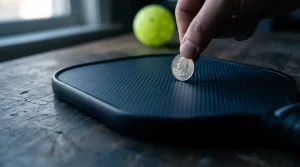
Selkirk adds that 0.1 oz is about the weight of a penny, while a 0.5 oz step is where most players start to notice. Read the paddle weight guide and lightweight versus heavy paddles before you add tape or change weight class.
If your elbow is the reason you are shopping, compression sleeves are worth a look alongside a lighter paddle.
USA Pickleball’s equipment standards cap the combined length and width of a paddle at 24 inches and the length at 17 inches. They set no limit on thickness or weight.
All four paddles here sit at or just under that 24 inch total, so the longer ones are narrower. Selkirk describes its Invikta shape as elongated with a large sweet spot and a long handle for power, reach and spin.
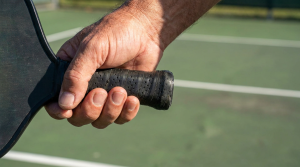
For the on-court differences see elongated versus standard paddles. If your hands are large, the big hands guide covers handle fit, and the grip size guide shows how to measure it.
The Vatic Pro V-Sol Pro is the carbon pick that fits an intermediate profile: a raw Toray T700 carbon face on a 16 mm core at an 8.0 oz average.
The JOOLA Hyperion is the carbon step up if you want an elongated shape and pace, and its listing gives a thinner core. For the material trade-off, see carbon fiber versus fiberglass paddles.
None of the four listings above describes its paddle as thermoformed, so this page does not rank one.
When you shop for one, look for a listing that states the core thickness, the weight in ounces and the grip size, then apply the same ranges the picker uses.
Name the weakness first. Dinks dying in the net and drives sailing long are different problems and call for different paddles.
Change one thing at a time, thickness or shape but not both. Keep your old paddle for a month so you have something to compare against.
Check the approval before you enter anything sanctioned, using the approved paddles article. The full ranking is in the best pickleball paddle guide, and how to choose a paddle walks through the whole decision.
We did not test these paddles. Core, weight and size figures come from the maker pages named in the table or, where a maker prints nothing, from the Amazon listing text.
Makers do not print swing weight for every paddle, and listed weights are averages, so a paddle you receive can differ by a few tenths of an ounce. We show no prices because they change daily.
Selkirk puts all-court paddles at about 14 to 16 mm, control paddles at about 16 mm or more and power paddles at about 13 mm or less. Intermediates still tightening dinks and resets usually do well at 16 mm, then move thinner only if they want more pace.
Selkirk says lightweight paddles give quicker hands and help control, while midweights add power and block better. If a heavier paddle hurts your arm, Selkirk suggests trying a lighter one. Pick the weight that feels comfortable through a full session, not just a few rallies.
Elongated shapes add reach, and Selkirk describes its elongated Invikta as having a large sweet spot with power and spin. USA Pickleball caps length plus width at 24 inches, so a longer paddle is narrower. If you mishit often, a standard shape is the safer choice.
For sanctioned play, yes. USA Pickleball's equipment standards limit paddle size to 24 inches combined length and width, cap length at 17 inches, and restrict surface roughness, but set no limit on weight or thickness. Check the current approved list before you enter any tournament.
Selkirk says players can generally feel a 0.5 oz difference between a lightweight and a midweight paddle, while 0.1 oz is about the weight of a penny. Stay within about 0.5 oz of your current paddle if you want it to feel familiar, and change in small steps.
Selkirk ties thinner cores, around 13 mm or less, to a stiffer surface and more power. Thicker cores of about 16 mm or more absorb more energy for control. The trade-off is a less forgiving feel on mishits, which matters most while your consistency is still developing.
Last updated: November 1, 2026