Pickleball Paddles: The Honest Buyer’s Guide
The complete guide to pickleball paddles in 2026. Types, materials, shapes, weights, and what actually matters when you buy.
The complete guide to pickleball paddles in 2026. Types, materials, shapes, weights, and what actually matters when you buy.
The pickleball paddle market in 2026 is bigger and more confusing than ever. Thermoformed, raw carbon, unibody, edge foam, foam-injected. Every brand claims a breakthrough. Here is what actually matters.
A pickleball paddle has four main parts: the face, the core, the edge guard, and the handle. The face material determines spin and power. The core thickness determines control and feel. The edge guard protects the core and affects the sweet spot. The handle connects you to the paddle.
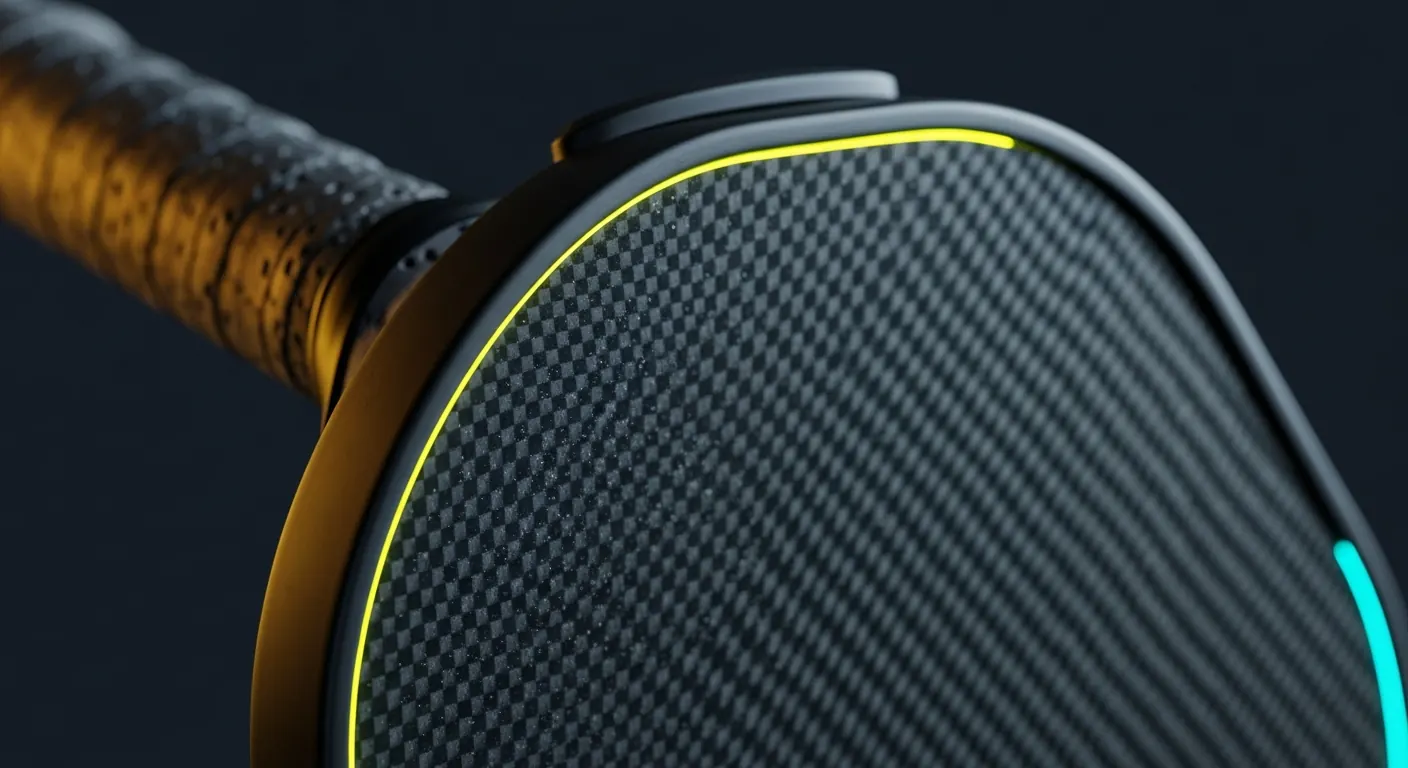
Raw carbon fiber faces have become the standard for spin-focused paddles. The textured surface grips the ball on contact, creating measurable spin RPM increases. Carbon faces tend to feel softer and more controlled.
Fiberglass faces are the original power faces. They flex and rebound, transferring more energy into the ball. Fiberglass paddles feel hotter off the face.
Hybrid faces combine layers of carbon and fiberglass to balance spin and power. Most Selkirk paddles use this approach.
The biggest shift in recent years is thermoformed construction. Traditional paddles press the face and core together at room temperature. Thermoformed paddles heat the materials during bonding, creating a more consistent connection and a larger sweet spot.
Foam-injected edges are the second major innovation. By filling the edge guard cavity with foam, manufacturers extend the sweet spot to the edge and reduce vibration. JOOLA, CRBN, and several smaller brands now use this technique.
Standard shape (16 by 8 inches) is the most common. It balances reach, sweet spot size, and maneuverability. Most beginners and intermediate players should start here.
Elongated shape (16.5 by 7.5 inches or longer) gives you extra reach for drives and overheads. The tradeoff is a smaller sweet spot and slightly less forgiveness. Advanced players and tennis converts often prefer this shape.
Widebody shapes (15.75 by 8.25 inches) maximize the sweet spot. They are forgiving but slightly slower through the air. Good for beginners and players who prioritize consistency.
Two paddles can weigh the same on a scale but feel completely different in your hand. The difference is swingweight, which measures how heavy the paddle feels when you swing it. Head-heavy paddles generate more power. Handle-heavy paddles are quicker at the net. Most stock paddles are slightly head-heavy.
Any paddle you buy for sanctioned play must be on the USA Pickleball approved paddle list. Most major brands submit their paddles for testing. Check the list before you buy if you plan to play in tournaments.
Keep reading: how to choose a pickleball paddle.
Thermoformed paddles are manufactured with heat-bonded face-to-core construction. This creates a more consistent bond, a larger sweet spot, and better durability compared to traditional cold-pressed paddles.
Start with a standard shape (16 by 8 inches). It offers the best balance of reach, sweet spot size, and maneuverability while you learn proper technique.
Swingweight measures how heavy a paddle feels during your swing. Two paddles can weigh the same static weight but have different swingweights depending on where the weight is distributed.
Last updated: June 16, 2026
Ratings marked "pending" indicate on-court testing has not yet been completed.