Indoor vs Outdoor Pickleball Shoes: Why the Outsole Matters
Indoor vs outdoor pickleball shoes come down to the outsole. Here is how the rubber and tread differ, what happens if you pick wrong, and if you need both.
Indoor vs outdoor pickleball shoes come down to the outsole. Here is how the rubber and tread differ, what happens if you pick wrong, and if you need both.
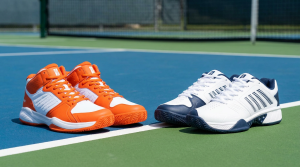
The difference between indoor and outdoor pickleball shoes comes down to the outsole. Indoor shoes run a softer, gummier rubber that grips smooth gym floors, while outdoor shoes use a harder compound that survives concrete and asphalt without shredding. Everything else, from cushioning to lateral support, is secondary.
Court surfaces are opposites. A gym floor is smooth and grippy, so a soft sole bites without needing deep tread.
Outdoor courts are rough and abrasive, so a soft sole would wear down in weeks. Outdoor outsoles fight back with harder rubber and a herringbone tread. For the full rundown on construction, see our pickleball shoes guide.
Wear indoor shoes outside and you will grind through the sole fast, sometimes in a month of regular play. The soft rubber simply cannot take the abrasion.
Wear outdoor shoes inside and you lose grip, since the harder sole slides on a polished floor. That slide is how ankle rolls happen.
Outdoor models lean on a tight herringbone tread that channels grit and grips textured surfaces. They also pack thicker, denser rubber to stretch their lifespan.
Indoor models use flatter, non marking soles that stay quiet and clean on wood. If you play on both surfaces, our picks in the best pickleball shoes roundup flag which models cross over.
If you play only one surface, buy for that surface and skip the second pair. Most recreational players stick to one court type anyway.
If you split time between a gym and outdoor courts, two pairs will save money over replacing one worn out pair every season. And if you are still using old tennis shoes, our pickleball shoes vs tennis shoes breakdown explains why court specific soles matter.
You can, but grip suffers on smooth gym floors and the harder sole can slide. For frequent indoor play, a softer indoor sole is safer.
With regular play on concrete, expect three to six months of solid grip before the tread smooths out. Rotating pairs stretches that timeline.
Most are. Indoor soles use non marking rubber so they do not leave scuffs on wood or sport court flooring.
Last updated: November 1, 2026